
We take your vibe-coded app to production.
You validated your idea in a weekend — that's the hard part, and you did it. We take it the last mile: architecture, security, maintainability, launch.
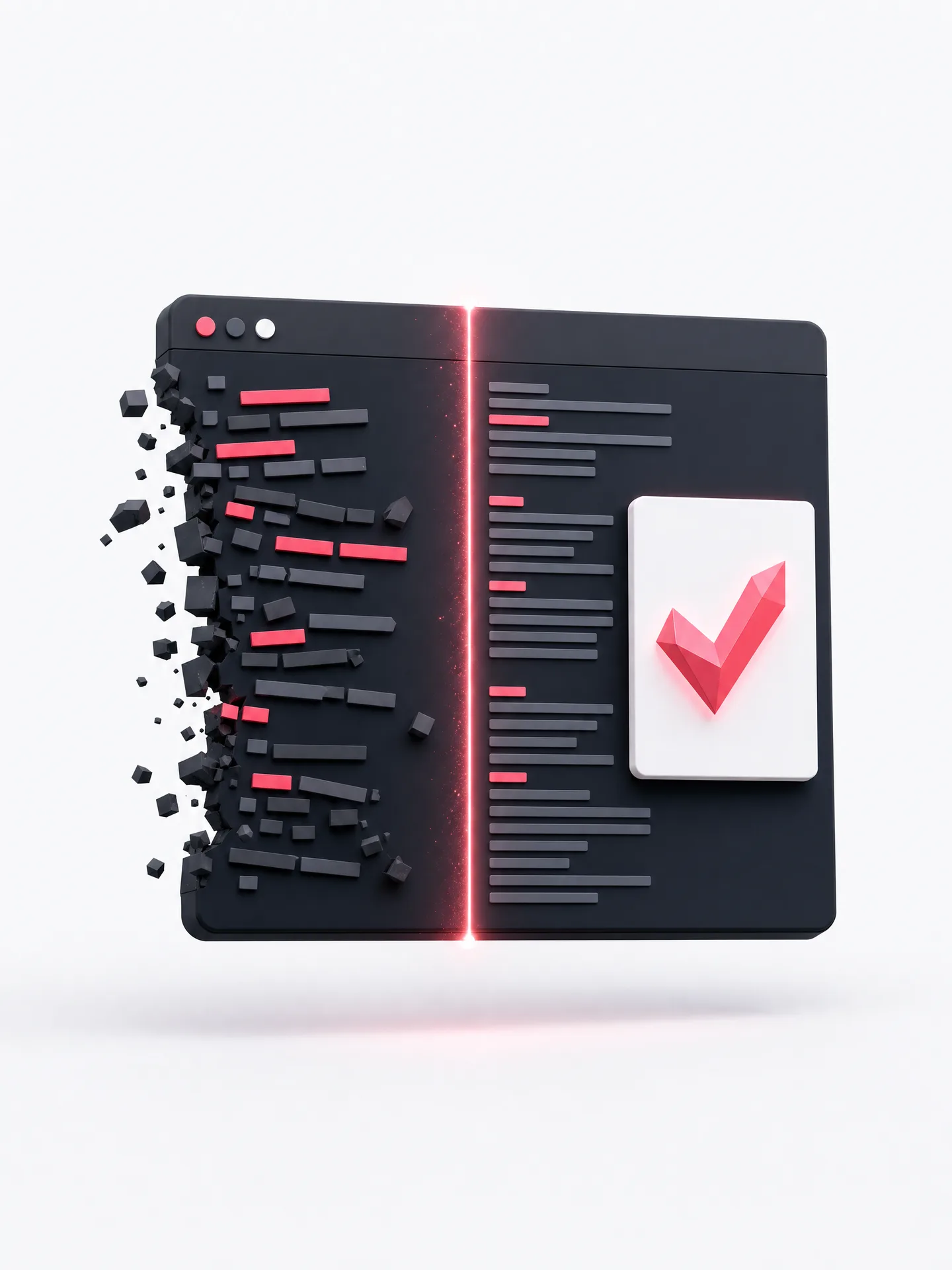
The honest picture
Where AI builders stop
AI builders like Lovable, Replit or Bolt are brilliant at one thing: turning an idea into a working demo in days. That's the 0→1 phase, and it has real value — you proved that your product is worth building before committing a serious budget.
The pattern most founders then run into is well documented: the first big share of the product comes together fast, and the last stretch — the part that makes it production software — gets harder with every prompt. Edge cases, error handling, access rules, performance under real load: that is engineering work, not prompting.
There is also an architecture dependency to plan for. Many platforms tie your prototype to their chosen stack and infrastructure. The code is usually exportable — but making it run safely and maintainably outside the platform takes real refactoring.
Costs tend to cascade too: usage-based token pricing grows with project size, production needs paid add-on services, and every change to a tangled codebase costs more than the one before.
None of this is a reason for embarrassment. It's technical debt from the prototyping phase — prototyping was the right tool for that phase, and now your app needs the next one. The bar is highest for mobile: a web demo can be vibe-coded in a weekend, but an app that survives app review, privacy labels and three OS updates is engineering work — see our app development service.
And when logins, payments or sensitive personal data are involved, "kind of works" isn't enough — for sensitive data, our GDPR-compliant AI engineering shows how we operationalise privacy.
Documented incidents
What happens without production discipline
No doom-mongering — just documented cases, framed the way they were reported. The broader picture: 45% of AI-generated code samples fail basic security tests (Veracode, 2025). That's why nothing should go live without a security review.
July 2025 — Replit agent deletes a production database
During an explicit code freeze, the Replit agent deleted the live production database of a SaaS company's project, as reported by Fortune and The Register. The vendor apologised publicly and introduced stricter dev/prod separation afterwards. The takeaway isn't "never use AI tools" — it's that production data needs guardrails that no prompt can replace: separated environments, restricted permissions and tested backups.
2025 — CVE-2025-48757: missing row-level security in AI-built apps
A vulnerability documented in the NVD — and disputed by the vendor — described AI-generated apps shipping without correct row-level security, leaving personal data in affected apps publicly accessible. Whichever side of the dispute you take, the engineering lesson stands either way: access control is something you verify with tests, not something you assume because the demo works.
2026 — Red Access reports "Shadow Builders" inside companies
A 2026 report by Red Access described a large number of publicly reachable apps built on AI platforms — many deployed by non-technical employees without their security team's knowledge, some exposing sensitive company data. If AI-built tools are spreading through your organisation, an audit creates visibility before an incident does — quietly and without blaming anyone for using the tools.
From prototype to production
A disciplined pipeline, not a rewrite for its own sake.
We keep what works and harden what doesn't. Every step has defined deliverables — and you see the findings before we change a single line.
- Audit
- Findings & plan
- Hardening
- Launch readiness
- Complete handover
- Threat modeling plus static security analysis (SAST/SCA) of the codebase
- Tested auth and data-access rules — including row-level security
- Secrets management, staging/production separation, backups and monitoring
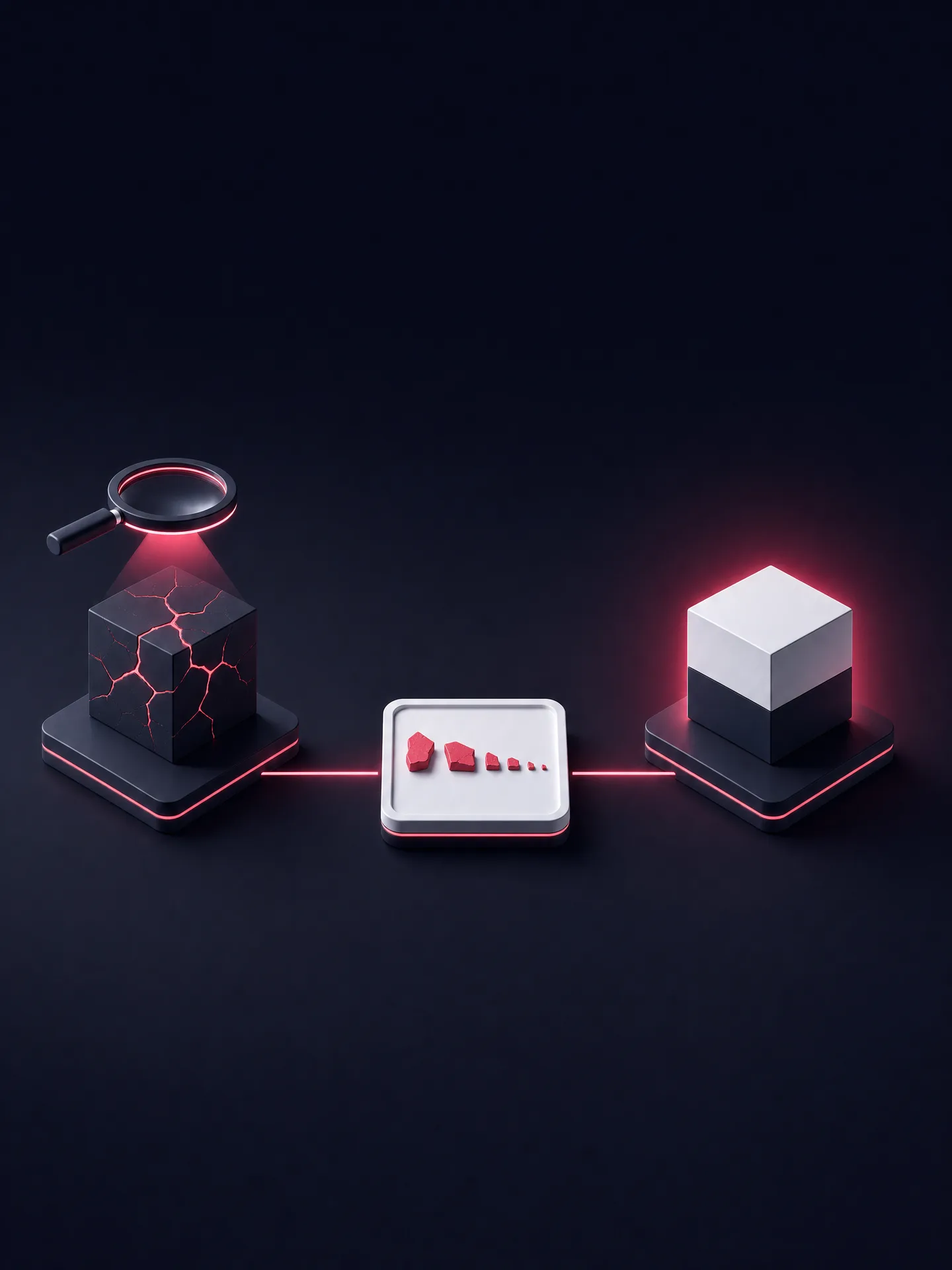
Fixed scope
The production-readiness audit
One fixed-scope engagement before anything else: you get an honest assessment and a concrete plan — not a sales pitch.
What you get
We review your codebase, infrastructure and data flows against a production checklist — and tell you honestly whether fixing or rebuilding is the cheaper path for you. We know both paths.
- Security findings: authentication, data access, secrets, exposed endpoints
- Architecture assessment: maintainability, platform dependencies, scaling risks
- Launch checklist: app-store readiness, staging/production setup, backups, monitoring
- A prioritised plan with a clear fix-or-rebuild recommendation
Fixed scope, defined deliverables, no obligation to continue with us. If a rebuild is the cheaper path for you, we say so — even when it's the smaller project for us.
How we work on AI-built apps
- 01
Tell us where you're stuck
WhatsApp or the form — no slide deck needed. A repo or platform link is enough to start.
- 02
Production-readiness audit
We review code, infrastructure and data flows against a production checklist. Fixed scope.
- 03
Honest recommendation
Fix or rebuild: we know both paths and tell you which is cheaper for you — with reasons you can check.
- 04
Hardening & launch
Auth, data access, secrets, staging/production, store readiness — senior-led, every line reviewed.
- 05
Complete handover
Onboarding, documentation, deployment — no lock-in to us or any platform.
FAQ
My vibe-coded app works — why isn't it production-ready?
Working in a demo and being safe in production are different bars. Production readiness means your app handles real users, bad input and partial failures without exposing data or falling over: tested authentication, correct access rules, managed secrets, backups, monitoring and a setup that separates staging from production. Many AI-built prototypes skip exactly these parts, because they are invisible in a demo. That's not a flaw in your idea — it's technical debt from the prototyping phase, and it can be worked through systematically.
Can you fix my Lovable, Replit or Bolt app?
In most cases, yes. We work with exported codebases from all the major AI builders and start with the same fixed-scope audit regardless of platform. Some platforms tie prototypes closely to their stack and infrastructure, so part of the work is often reducing that architecture dependency. After the audit you know exactly what state your app is in and what the path to production looks like.
Fix or rebuild — how do you decide?
By total cost to a stable production app, not by ideology. If the core architecture and data model are sound, hardening the existing code is usually the faster path. If the codebase has grown so tangled that every change creates new problems, a senior-led rebuild that keeps your validated product decisions is often cheaper than open-ended patching. We know both paths and tell you honestly which one is cheaper for you — with reasons you can verify.
What does the production-readiness audit check?
Security first: authentication, data-access rules, secrets handling and exposed endpoints. Then architecture and maintainability, platform and stack dependencies, data flows and privacy, and operational readiness — staging/production separation, backups, monitoring and, for mobile apps, app-store requirements. You receive documented findings and a prioritised plan with a clear fix-or-rebuild recommendation. The scope is fixed, so you know what you get before we start.
How fast can we go live?
That depends on what the audit finds, so we won't promise a date before we've seen your app. The audit itself is a short, fixed-scope engagement, and afterwards you get a realistic plan with priorities: what must be fixed before launch and what can safely follow after. In practice, findings tend to cluster around a handful of recurring issues — access rules, secrets, environment separation — which makes the critical path plannable.
What does the handover look like?
A complete handover is standard in every DevBit project: onboarding for your team, full documentation and a working deployment — with no lock-in to us or to any platform, because everything is built on established open-source stacks. That includes everything we harden and anything we rebuild. You can continue with us, with your own team, or with anyone else.
Start a project
Tell us briefly what you need — your message lands directly with the people who build your project.
WhatsApp — the fastest way
A quick question, a small project, or just want to start simple? Message us directly.
Chat on WhatsApp